The WNBA Playoffs are where offensive comfort disappears.
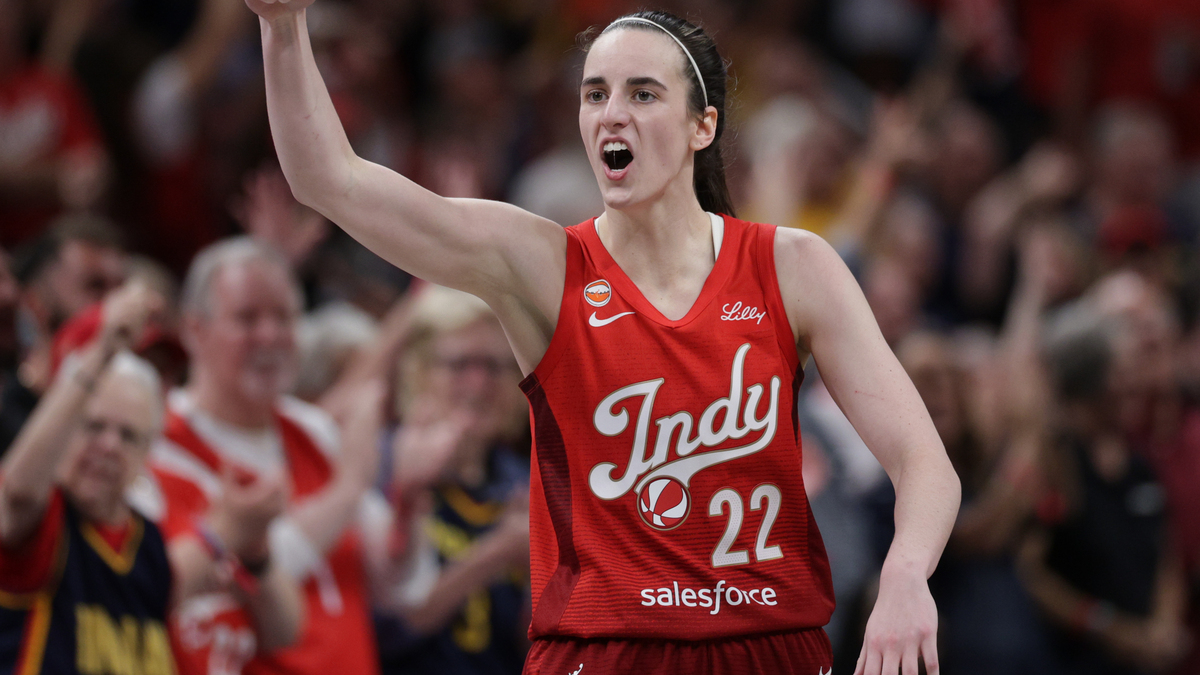
Opponents know every action, scouting reports become precise, and defenses adjust. Sets that produced clean shots during the regular season are disrupted by switching, trapping and aggressive help. That is when a shot creator becomes one of the most valuable players on the floor.
A true shot creator does more than lead their team in scoring. They manufacture offense when the first option is removed, break down a defender without needing a screen and create separation late in the shot clock. Their ability to score at all three levels forces defenses into difficult choices: defend her one-on-one, send a second defender or concede a favorable matchup. Each response can unlock opportunities for teammates.
When Structure Breaks Down
That responsibility becomes greater in close playoff games, when transition chances decline and possessions become half-court battles. A creator must recognize mismatches, attack switches, draw fouls and remain composed when a defense loads toward her. Even an unsuccessful attempt has value if she collapses the defense and produces an open 3-pointer, basket cut or offensive-rebounding opportunity.
The best playoff offenses usually possess multiple creators, preventing opponents from concentrating their coverage on one star. But when schemes fail and the clock approaches zero, every contender needs someone capable of turning a broken possession into a quality shot. In a postseason often decided by execution during the final five minutes, elite shot creation is not merely an attractive skill. It can determine which team survives, advances and ultimately wins the championship.
The following are our top five shot creators headed to the 2026 WNBA Playoffs (statistics are updated through games completed Tuesday, Sept. 22):
1. A’ja Wilson, Las Vegas Aces
A'ja Wilson remains the WNBA’s most dependable one-on-one scorer and its ultimate bailout option. She attacks from the elbow, overpowers switches, faces up slower posts and creates separation with a high-release turnaround jumper. Wilson is averaging 26.0 points, 9.4 rebounds and 3.2 assists while shooting 52.5%, 40.7% from three and 86.3% at the line. She also carries a league-leading 32.5% usage rate yet maintains a 62.5% true-shooting percentage, an extraordinary combination of volume and efficiency. Wilson added 18 points and 10 rebounds Tuesday against the Los Angeles Sparks, helping Las Vegas secure at least the No. 3 playoff seed.
Her shot creation is distinctive because it begins inside rather than exclusively from the perimeter. She can establish deep position, drive from the nail, score over either shoulder or draw contact before the defense completes its rotation. That versatility prevents opponents from solving her with one matchup or coverage.
When playoff possessions slow down, the Aces can clear a side and let Wilson dictate the action without requiring elaborate screening. If the double-team arrives, she has become comfortable finding cutters and weak-side shooters. Few stars place greater physical and tactical stress on a defense, making Wilson the safest late-clock scorer entering the postseason.
A’ja owned both ends of the floor tonight! 👑
♣️18 PTS
♣️10 REB
♣️2 BLK
♣️47% FG#ALLINLV pic.twitter.com/IrhDfMEwd6— Las Vegas Aces (@LVAces) September 23, 2026
2. Caitlin Clark, Indiana Fever
Caitlin Clark’s combination of shooting range, ball-screen manipulation and passing makes her impossible to defend conventionally. She can launch several feet beyond the arc, reject a screen, split two defenders or keep a trailing defender imprisoned while reading the back line. Clark is averaging 22.8 points, 8.5 assists and 3.9 rebounds while shooting 45.3% overall, 36.9% from three and 85.2% at the line. She delivered 27 points, nine assists and seven rebounds in Indiana’s 96-77 victory over Minnesota on Tuesday, repeatedly punishing the Lynx for losing contact with her around screens.
Clark’s defining advantage is that her scoring gravity creates shots before she even attempts one. Defenders must extend far beyond the 3-point line, opening driving lanes and forcing interior help to arrive earlier than intended. Her six career games with at least 30 points and 10 assists exceed the four produced by every other player in league history combined. Clark also became the first WNBA player to record that stat line in consecutive games. In the postseason, opponents will blitz her and attempt to force the ball elsewhere. Her responsibility is to balance aggression with control, because Indiana’s ceiling rises whenever she converts defensive pressure into offense for the lineup.
💪💪💪 https://t.co/MRshCQ6Of1 pic.twitter.com/ZAmRAe8b5G
— Indiana Fever (@IndianaFever) September 23, 2026
3. Kelsey Mitchell, Indiana Fever
Kelsey Mitchell may be the league’s most explosive movement scorer, but she is equally dangerous creating off the dribble. She changes direction at full speed, attacks compromised closeouts and stops abruptly for pull-up jumpers. Mitchell is averaging 25.0 points while shooting 51.4%, 45.2% from three and 85.0% at the line. She has accumulated a WNBA-record 1,076 points through 43 games, including 20 in Indiana’s victory over the Lynx.
Her value differs from Clark’s because Mitchell does not need to dominate the ball to destabilize a defense. She sprints through staggered screens, relocates after passing and forces defenders to chase her across actions. That movement can exhaust a primary stopper and punish teams loading extra attention toward Clark.
Mitchell is also lethal when attacking the imbalance created when a defender closes too hard; one sharp dribble can take her into a pull-up, floater or finish at the rim. Her compact release allows her to shoot before help arrives, a playoff skill against quick recoveries. Indiana can use Mitchell as a possession finisher rather than an organizer. When structured offense produces only a narrow opening, her footwork, acceleration and shooting touch can transform that advantage into points without requiring another pass or screen.
Kelsey Mitchell had her defender dancin' 👀 pic.twitter.com/dL4tSJOcuU
— Indiana Fever (@IndianaFever) September 20, 2026
4. Paige Bueckers, Dallas Wings
Paige Bueckers is a polished scorer who operates from the midrange, gets defenders on her hip, changes speeds, and rarely appears rushed. She is averaging 20.8 points, 5.9 assists and 4.1 rebounds while shooting 51.0%, 40.9% from three and 86.5% at the line. Her 60.8% true-shooting mark reflects efficiency for a guard entrusted with difficult attempts and late-clock decisions.
Bueckers reinforced that value Monday at Phoenix, producing 30 points and seven assists while nearly winning the game on Dallas’ final possession. Her signature quality is pace control. Rather than attempting to win every matchup with raw speed, she decelerates, uses hesitations and keeps defenders uncertain about whether she will shoot, pass or continue toward the basket. That patience lets her reach preferred spots without losing her balance.
Bueckers also reads the second defender early, so traps become passing opportunities instead of possession-ending emergencies. Her 2.7 assist-to-turnover ratio illustrates how efficiently she manages simultaneous scoring and playmaking responsibilities. During the playoffs, Dallas will encounter defenses determined to remove her first option and crowd her comfort zones. Bueckers’ poise, touch and ability to create midrange looks give the Wings an answer against switching schemes that concede neither the rim nor uncontested 3-pointers.
only right to view this on widescreen 📺 pic.twitter.com/A27qiPdZJV
— Dallas Wings (@DallasWings) September 22, 2026
5. Arike Ogunbowale, Dallas Wings
Arike Ogunbowale remains one of the WNBA’s most dangerous self-generated scorers, although her role has changed beside Bueckers. She is averaging 15.1 points, 3.0 rebounds and 3.2 assists. Those numbers are well below her previous-season volume, but they reflect reduced responsibility rather than a disappearance of her shot-making ability.
Ogunbowale still creates separation with crossovers, step-backs and rapid changes of direction, giving Dallas an alternative whenever its primary action stalls. Her development has been selective. After shooting 33.6% during her first 20 games, she averaged 17.2 points while shooting 46.2% across the next 20, raising her true-shooting percentage to a career-best 54% at that stage.
She attacked the rim more frequently, reduced low-value attempts and became more willing to continue the possession instead of forcing an immediate jumper. That evolution matters because Dallas no longer needs her to absorb every difficult shot. Ogunbowale can target second-side opportunities, exploit a weakened defender or take control when Bueckers rests or draws coverage.
She also possesses experience taking consequential shots, an intangible that carries value when playoff possessions become chaotic. If she preserves her improved discipline, Dallas can deploy two contrasting creators: Bueckers controlling tempo with precision and Ogunbowale injecting sudden, unpredictable pressure.
WINGS UP BABY 🪽 https://t.co/CyK7Dgnx6d pic.twitter.com/JWOXAgmUyy
— Dallas Wings (@DallasWings) September 19, 2026
W.G. Ramirez is a veteran sports writer from Las Vegas and a Staff Writer at Ballislife.com. Follow him on X at @WillieGRamirez.