

With the WNBA regular season entering its decisive home stretch, the league’s eight playoff teams are shifting into postseason mode. Seeding, home-court advantage and first-round matchups remain at stake, making every possession increasingly meaningful as rotations tighten and championship contenders define their identities.
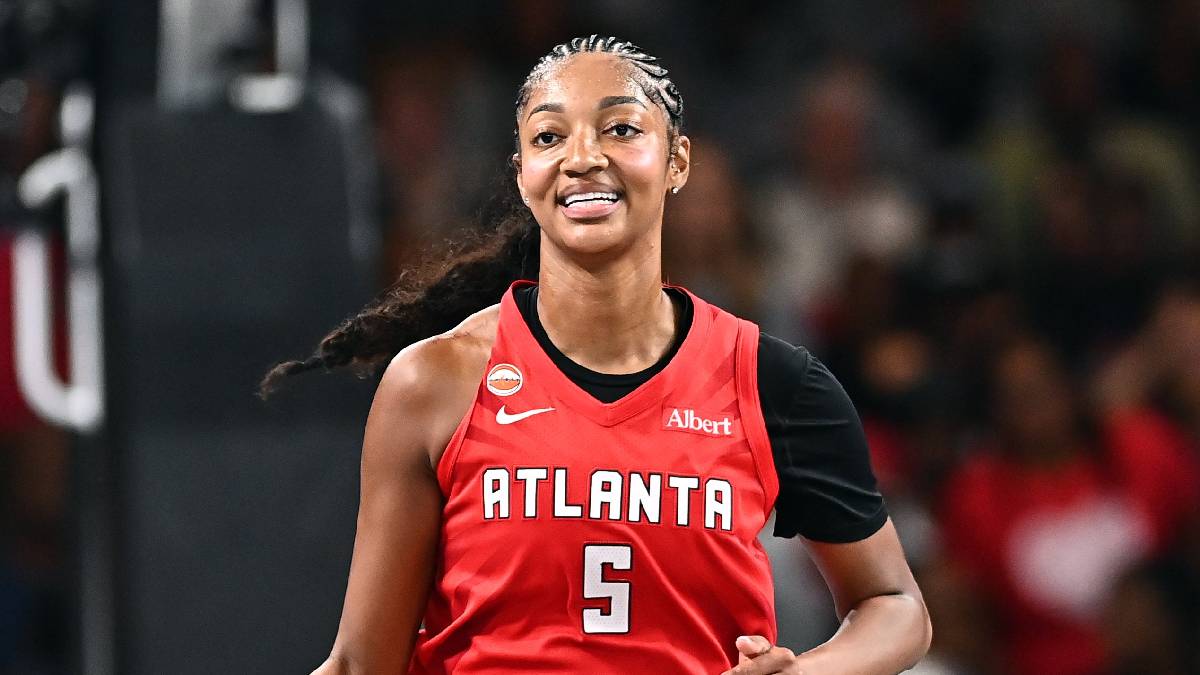
Our three-part series ranking the leading players from the playoff field now moves from the backcourt to the frontcourt. After examining the league’s top guards, the second installment focuses on the forwards whose versatility, physicality and two-way production could determine which teams survive deep into October.
Versatility Becomes Vital in the Postseason
The position has evolved far beyond traditional interior play. Today’s premier forwards must score from multiple levels, defend across several positions, rebound in traffic and create opportunities for teammates. Some operate as primary offensive weapons, while others influence games through defense, screening, spacing and relentless work on the glass.
Their importance becomes even greater during the postseason. Half-court possessions increase, transition opportunities decrease and opponents have more time to identify and exploit weaknesses. Teams need forwards capable of handling switches, protecting the rim, punishing smaller defenders and producing efficiently when perimeter shots stop falling.
These rankings consider regular-season production, efficiency, rebounding, defensive impact, versatility, leadership and proven performance under postseason pressure. Statistics provide the foundation, but team success, individual responsibility and the ability to affect winning in multiple ways also carry considerable weight.
Here is our ranking of the top 10 forwards from this year’s playoff field (Minnesota, Golden State, Las Vegas, Atlanta, Indiana, New York, Washington and Dallas):
1. Breanna Stewart, New York Liberty
Stewart remains the standard among pure forwards in the playoff field, averaging 20.4 points and 8.1 rebounds while carrying a 27.1% usage rate. Her length allows her to shoot over smaller defenders, attack slower frontcourt players and protect the rim defensively.
New York can run its offense through the three-time WNBA champion in the post, from the perimeter, or as a screener because she is equally comfortable scoring and facilitating. The two-time Finals MVP’s postseason résumé further separates her from the field, as she returns to the regular season after winning the World Cup MVP. When playoff possessions slow and get more physical, that versatility becomes even more valuable.
Turnaround J from Stew York for ✌️@breannastewart 🎯 | #LIGHTITUPNYL🗽 pic.twitter.com/ZGo9byfTI7
— New York Liberty (@nyliberty) August 29, 2026
2. Napheesa Collier, Minnesota Lynx
Collier’s debut in the 2026 regular season was delayed by her recovery from surgeries on both ankles, but her complete body of work and recent return keep her near the top. She averaged 22.9 points, 7.3 rebounds, 3.2 assists, 1.6 steals and 1.5 blocks in 2025 while becoming only the second WNBA player to produce a 50-40-90 season. This season, she's averaging 18.0 points, 7.3 rebounds, 2.8 assists, 1.4 steals, and 1.0 blocks through her first 12 games back.
Minnesota can deploy the versatile forward as a scorer, screener, rebounder or multi-positional defender without changing its system. Her presence raises the ceiling of a team that already owns the league’s best record and boasts a 116.7 offensive rating with her on the court.
PHEE IS ON FIRE 🔥 11 PTS AND THE FIRST QTR ISN'T EVEN OVER YET ‼️ pic.twitter.com/d2If4E5I7C
— Minnesota Lynx (@minnesotalynx) August 30, 2026
3. Angel Reese, Atlanta Dream
Reese has expanded her game while remaining the league’s most dominant rebounder. She leads the WNBA with 12.4 rebounds per game and 198 offensive rebounds while contributing 16.1 points. Those extra possessions are particularly valuable in the postseason, when scoring efficiency typically declines.
The Atlanta forward also leads the league with 2.9 defensive win shares and ranks fifth with a 101.6 defensive rating. Her improved passing gives the Dream another way to initiate offense from the frontcourt, while her physicality allows them to play smaller without sacrificing rebounding. A lineup featuring Rhyne Howard, Allisha Gray, Jordin Canada, Naz Hillmon and Reese has produced an elite 99.4 defensive rating.
Rate this pick six, @LSUfootball 👀#USABWNT x #FIBAWWC 🏆 pic.twitter.com/TNMfRDdXBt
— USA Basketball (@usabasketball) September 6, 2026
4. Jessica Shepard, Dallas Wings
Shepard has quietly developed into one of the league’s most productive frontcourt players, averaging 14.4 points, 11.1 rebounds and 4.9 assists. She ranks second in rebounding and sixth in total win shares at 6.3, including 4.4 offensive win shares.
Her passing lets Dallas run actions through the high post, relieving some of the creation burden on Paige Bueckers. The veteran forward also sets strong screens, controls the defensive glass and consistently makes the right extra pass. Although she may not possess the scoring reputation of those ranked above her, her intelligence and versatility are central to the Wings’ transformation into a playoff team.
https://t.co/BTckeuU4ug pic.twitter.com/C1GrQmE2Cp
— Dallas Wings (@DallasWings) August 31, 2026
5. Natasha Howard, Minnesota Lynx
Howard supplies Minnesota with interior scoring, relentless rebounding and proven championship experience. She averages about 15 points and 7.7 rebounds, ranks fifth in player efficiency rating at 23.0 and seventh with 6.2 win shares.
Her 135 offensive rebounds rank second in the league, giving the Lynx another source of high-value possessions. The veteran can score as a roller, run the floor in transition and defend multiple frontcourt positions. That flexibility becomes especially important alongside Collier, whose perimeter skills allow the two to interchange responsibilities. Howard’s three championship rings also make her a trusted performer when postseason pressure intensifies.
THAT'S NATASHA HOWARD BASKETBALL, BABY. 😮💨 pic.twitter.com/AuNfLdfqf1
— Minnesota Lynx (@minnesotalynx) July 14, 2026
6. Gabby Williams, Golden State Valkyries
Williams is the defensive heartbeat of a Golden State team ranked second in the standings. She is averaging 14.3 points per game while providing exceptional versatility as a rebounder, facilitator and transition scorer. Her 99.8 defensive rating ranks second, while her 2.4 defensive win shares rank eighth.
Golden State can assign the athletic forward to guards, wings or mobile frontcourt players, allowing the Valkyries to switch extensively without creating obvious mismatches. Her 29.1% usage rate demonstrates that she also carries substantial offensive responsibility. Williams’ shooting can fluctuate, but her athleticism, passing and relentless defensive activity influence games even when her jumper is not falling.
perfect pass by Gabby, TOUGH finish by KT pic.twitter.com/fno4uphNj6
— Golden State Valkyries (@valkyries) May 11, 2026
7. Kiki Iriafen, Washington Mystics
Iriafen has become an essential piece of Washington’s young playoff core, averaging 15.3 points and 9.4 rebounds per game. She is tied for third in the league in rebounding (9.4), third in offensive rebounds with 111, and 10th in defensive win shares with 2.2.
Her strength allows her to establish deep position, finish through contact and compete against larger frontcourt players. The rookie is also mobile enough to defend in space and run the floor alongside Washington’s young guards. Her partnership with Shakira Austin gives the Mystics one of the league’s most physical interior combinations, while her rebounding helps them survive possessions when their perimeter offense becomes inconsistent.
MAKE IT 3 FOR KIKI pic.twitter.com/l4MkWQBJxl
— Washington Mystics (@WashMystics) August 29, 2026
8. Janelle Salaün, Golden State Valkyries
Salaün’s statistical production doesn't fully capture her importance to Golden State. She supplies size, spacing and defensive flexibility within a lineup constructed around switching and ball movement. Her 92 made 3-pointers give the Valkyries a frontcourt threat that can pull defenders away from the basket.
The French forward’s 103.7 defensive rating ranks among the league’s best, reflecting her ability to defend without compromising Golden State’s overall structure. She is not asked to dominate the ball, but she runs the floor, rebounds her position and keeps possessions moving. Her low-maintenance style complements Williams and Veronica Burton extremely well.
Timely bucket by Janelle Salaün to give the @valkyries a 3-PT lead with 1:48 left 🗣️
IND-GSV | Prime Video
Tap to watch: https://t.co/KPdurhFV74 pic.twitter.com/NSNVk5zgYy— WNBA (@WNBA) May 29, 2026
9. Leonie Fiebich, New York Liberty
Fiebich’s individual statistics do not fully reflect her importance to New York’s championship structure. At 6-foot-4, she gives the Liberty a versatile defender who can switch across multiple positions while also stretching defenses from beyond the arc.
The German forward moves intelligently without the ball, makes quick decisions and rarely disrupts the offensive rhythm by forcing shots. Her length becomes especially valuable during the postseason, when New York can use her to bother elite perimeter scorers without sacrificing size or rebounding. She already owns championship experience and has demonstrated the composure to defend and convert timely shots in pressure-packed playoff possessions.
Leonie Fiebich tonight 🔥
• 20 points
• 5 rebounds
• 5 assists
• 3/5 3PM
• 7/10 FG pic.twitter.com/wPwtLyfTXu— Women’s Hoops Network (@WomensHoops_USA) August 23, 2026
10. Naz Hillmon, Atlanta Dream
Hillmon completes Atlanta’s exceptionally physical and versatile forward rotation. Her individual statistics are modest compared with those of the players ranked above her, but her screening, rebounding, interior defense and willingness to handle difficult assignments provide meaningful value.
The former Michigan standout can play beside Reese or replace her without forcing Atlanta to abandon its defensive identity. The Dream’s principal lineup featuring both players has registered a 118.0 offensive rating and 99.4 defensive rating across 545 minutes - one of the league’s strongest two-way combinations. Hillmon’s ability to contribute without requiring designed plays makes her an ideal postseason role player.
Naz Hillmon and Angel Reese went off in the @AtlantaDream's road win over the Tempo 🤩
Hillmon didn't miss a shot going 8/8 from the field and 4/4 from the three to end with 24 PTS! Reese continues to lead the league in double-doubles as she recorded her 17th of the szn with 23… pic.twitter.com/yQAJ7z6KeY
— WNBA (@WNBA) July 18, 2026
Honorable Mentions
NaLyssa Smith, Kayla Thornton, Nia Coffey and Maddy Siegrist
Smith would have earned a place in the top 10 if healthy, but her season-ending injury removes her from postseason consideration. Her ability to score inside, rebound and run the floor would have added another physical dimension to Las Vegas’ frontcourt.
Thornton brings defensive toughness, positional versatility and championship experience, making her particularly valuable in playoff matchups that require switching. Coffey provides Minnesota with dependable perimeter shooting and the flexibility to defend either forward position. Siegrist gives Dallas an efficient complementary scorer who moves well without the ball, attacks defensive gaps and competes on the glass.
Each offers a distinct skill set that can strengthen a postseason rotation, even without carrying the same statistical workload as the players selected for the top 10.
W.G. Ramirez is a veteran sports writer from Las Vegas and a staff writer at Ballislife.com. Follow him on X at @WillieGRamirez.
Editor's Pick
 4 Predictions for WNBA's Final Four (Games)