The FIBA Women’s Basketball World Cup is in the rearview mirror, and the attention now shifts back to the WNBA, where the stretch of the regular season promises urgency, intensity and postseason drama.
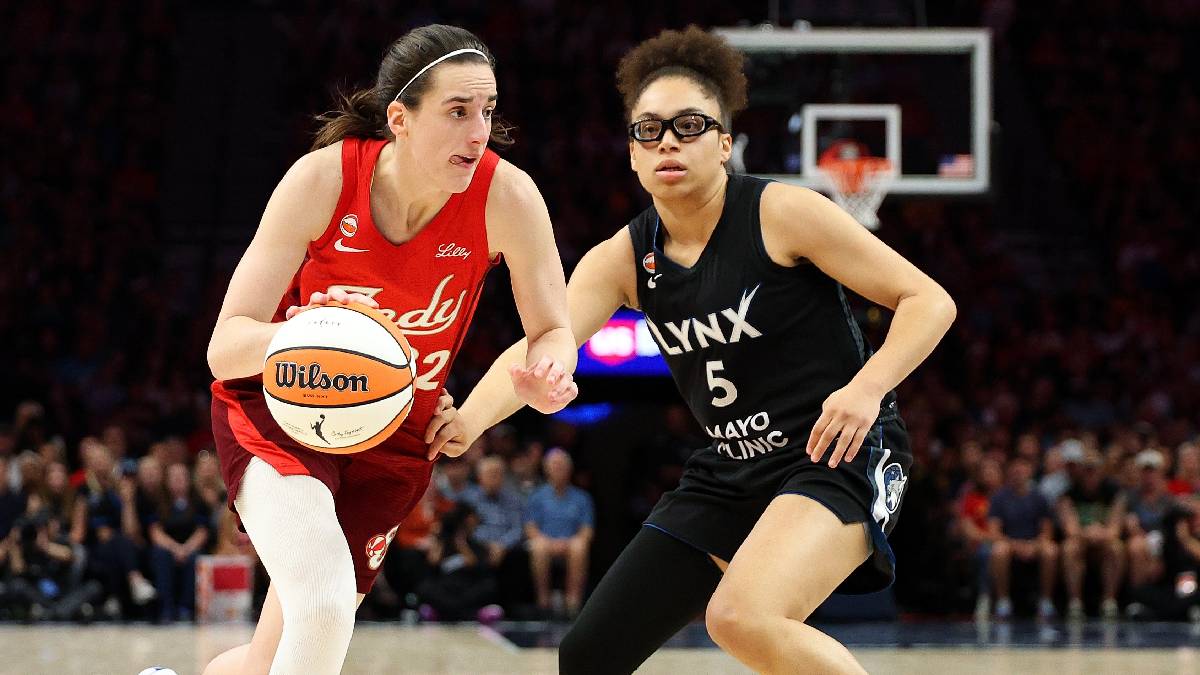
With the league’s eight playoff teams established, every remaining game carries significance. Contenders are fighting for seeding and home-court advantage, while coaches must reintegrate players returning from international competition. Rotations will tighten, weaknesses will be targeted and the margin for error will shrink as the postseason approaches.
This is the perfect time to evaluate the players who can shape the championship race. The WNBA’s playoff field is loaded with talent at every position, from dynamic perimeter creators and versatile wings to dominant interior forces. Over this three-part series, we will rank the best players by position from the eight teams still competing for the title.
Backcourt Stars Take Center Stage
We begin in the backcourt, where the league’s collection of guards may be deeper and more dangerous than ever. This group includes explosive scorers, facilitators, elite shooters and relentless perimeter defenders. Some control games through pace and passing, others can erupt for 30 points, and several possess the versatility to influence both ends of the floor.
The rankings will consider regular-season production, efficiency, playmaking, defensive impact, leadership and the ability to perform when playoff pressure rises. Statistics matter, but so do role, team success and postseason reliability.
With the World Cup complete and the WNBA championship chase resuming, here is our ranking of the top 10 guards from this year’s playoff field (Minnesota, Golden State, Las Vegas, Atlanta, Indiana, New York, Washington and Dallas):
1. Caitlin Clark, Indiana Fever
Clark remains the league’s most dangerous offensive engine, combining 22.5 points with 8.4 assists per game, tied for the WNBA lead. Her range forces defenses to extend well beyond the 3-point line, creating driving lanes and favorable interior opportunities for Indiana’s frontcourt. Clark’s high-usage role contributes to 4.6 turnovers per game, but that number must be weighed against the enormous volume of possessions she creates.
Few guards manipulate help defenders, accelerate transition offense or deliver crosscourt passes as effectively. With Clark directing the attack and Kelsey Mitchell stretching defenses beside her, Indiana owns arguably the most explosive backcourt in the playoff field.
A HISTORIC PERFORMANCE BY CAITLIN CLARK 🔥
She recorded 45 PTS (career-high), 10 AST, 6 3PM, 4 STL & 2 BLKS to log the first 40+ points and 10+ assists stat line in a game in WNBA History! She also became the fastest player to reach 200 career three pointers and the first in… pic.twitter.com/QlJinDIIf7
— WNBA (@WNBA) July 18, 2026
2. Paige Bueckers, Dallas Wings
Bueckers has elevated Dallas from a rebuilding team into a legitimate playoff threat, producing 20.5 points and 5.9 assists per game. Her offensive rating of roughly 120 demonstrates how efficiently she balances scoring and facilitating while carrying a substantial workload. Bueckers excels from the midrange, finishes smoothly around the basket and rarely appears rushed against pressure.
She also possesses the size and anticipation to disrupt passing lanes defensively. Dallas can get the ball into her hands in late-game possessions and trust her to create a quality attempt. Her combination of composure, efficiency and three-level shot-making already places her among the league’s premier postseason guards.
Every bucket had an answer 😮💨
Marina Mabrey and Paige Bueckers each dropped 34 points in yesterday's Dallas-Tempo thriller in this week's Point for Point presented by @mmschocolate. pic.twitter.com/s243Yx6JjB
— WNBA (@WNBA) July 11, 2026
3. Rhyne Howard, Atlanta Dream
Howard may be the most complete two-way guard in the playoff field. She averages approximately 18 points while leading WNBA guards with 2.3 steals per game, combining elite anticipation with the size to defend either backcourt position. Howard is also one of the league’s most prolific perimeter threats, averaging approximately 3.3 made 3-pointers per game.
That shooting gravity creates space for Angel Reese inside and allows Allisha Gray and Jordin Canada to attack rotating defenses. Howard’s two-way versatility and ability to impact winning extend well beyond traditional scoring numbers. She can change a playoff game with her shot-making, defensive pressure and playmaking at either end.
Two 29 pieces. One statement win 😮💨
Rhyne Howard and Allisha Gray combined for 58 PTS and 9 threes to lead the @AtlantaDream past Connecticut.
Howard: 29 PTS | 5 3PM | 5 REB | 4 AST | 3 STL
Gray: 29 PTS | 4 3PM | 3 REB | 3 ASTWNBA Rivals Week | @Ally pic.twitter.com/N7lE2DFt3s
— WNBA (@WNBA) August 14, 2026
4. Kelsey Mitchell - Indiana Fever
Mitchell is the WNBA’s highest-scoring guard at 25.0 points per game, but her efficiency makes the production even more impressive. She is shooting approximately 51% from the field and 45% from 3-point range while connecting on three triples per game.
Mitchell’s speed coming off screens places tremendous pressure on defenders, while her quick release punishes opponents for helping toward Clark. She also commits only 1.8 turnovers per game, an excellent figure for such a high-volume scorer. Mitchell does not need to dominate the ball to control a game, making her the perfect backcourt complement for Clark and one of the league’s most difficult playoff assignments.
KELSEY MITCHELL EXTENDS HER 20+ POINT STREAK TO 23 GAMES. ‼️
📺WNBA on NBC & Peacock pic.twitter.com/t6pt2lqU3T
— WNBA on NBC and Peacock (@WNBAonNBC) August 24, 2026
5. Olivia Miles, Minnesota Lynx
Miles has played with remarkable command during her rookie season, averaging 19.7 points, six assists and 4.6 rebounds for the WNBA’s top team. She is shooting approximately 50% overall and 40% from beyond the arc, impressive efficiency for a first-year guard responsible for initiating a championship-caliber offense.
At 5-foot-10, Miles sees over smaller defenders and uses her size to finish through contact or locate shooters across the floor. Her 3.1 turnovers reflect the aggressive nature of her playmaking, but Minnesota gladly accepts that tradeoff. Miles has accelerated the Lynx’s offense without sacrificing its structure, immediately becoming one of the league’s most impactful guards.
Olivia Miles scored a career-high 33 PTS (10/16 FG) with 8 AST and became the fastest player in WNBA history to 400 PTS/100 REB/100 AST (22 games)! pic.twitter.com/xP1EDN2WiF https://t.co/8ir4OyZscI
— Ballislife.com (@Ballislife) July 14, 2026
6. Jackie Young, Las Vegas Aces
Young’s versatility makes her indispensable to Las Vegas. She averages 18.9 points, 6.6 assists and 4.4 rebounds per game while shooting 48% from the floor, 39% from 3-point range and 93% at the foul line. Those numbers reveal a player without an obvious offensive weakness.
Young can initiate the offense, attack mismatches, space the floor alongside Chelsea Gray or defend the opponent’s most physical perimeter scorer. She also commits only 2.4 turnovers despite carrying significant playmaking responsibility. A’ja Wilson remains the center of the Aces’ championship formula, but Young’s ability to fill virtually every backcourt role gives Las Vegas extraordinary lineup flexibility.
Jackie Young is ON FIRE early for the Aces 🔥 pic.twitter.com/EYAD6rlKxP
— Sports on Prime (@SportsonPrime) July 31, 2026
7. Kayla McBride, Minnesota Lynx
McBride remains one of the league’s premier perimeter shooters, averaging 18.1 points while making approximately 2.9 3-pointers per game. She is shooting 46.5% overall, 41.7% from beyond the arc, and better than 90% from the foul line, producing elite efficiency without needing constant possession of the ball.
McBride’s movement forces defenders to navigate screens throughout the shot clock, creating space for Miles and Minnesota’s interior players. She also contributes 3.1 rebounds, 2.2 assists and strong positional defense while averaging fewer than two turnovers. Her experience, shooting, and composure make her particularly valuable as playoff games slow down and become more possession-oriented.
Kayla McBride 👏
43 Points (career high)
10 Threes (WNBA record)(Via @WomensHoops_USA) pic.twitter.com/WlwzGtJYXk https://t.co/ZiHVjoRvkc
— Ballislife.com (@Ballislife) August 9, 2026
8. Allisha Gray, Atlanta Dream
Gray gives Atlanta a second powerful two-way scoring option alongside Howard. She averages approximately 19 points while shooting around 46% from the field and supplying dependable defense against multiple perimeter positions. Gray’s physicality is especially important because it allows her to absorb contact, attack smaller guards and consistently reach the foul line.
She does not need every possession designed for her, yet she can take control when Atlanta’s primary actions break down. With Howard stretching defenses and Canada organizing the offense, Gray can concentrate on attacking favorable matchups. Her combination of strength, shot creation, defensive versatility and experience makes her exceptionally well-suited for postseason basketball.
Allisha Gray today:
• 23 points
• 11 REBOUNDS
• 3 steals
• 6/11 3PM
• 8/16 FG pic.twitter.com/PLVXw09hQh— Women’s Hoops Network (@WomensHoops_USA) August 30, 2026
9. Sonia Citron, Washington Mystics
Citron has quickly developed into Washington’s most dependable perimeter player, averaging 16.8 points, 3.7 rebounds, and 4.3 assists per game. Her efficiency is particularly encouraging, as she shoots close to 48% from the field and 87.2% at the foul line. Citron’s 6-foot-1 frame allows her to shoot over smaller defenders, switch across multiple positions and contribute as a secondary rebounder.
She also averages 1.2 steals and 0.6 blocks, numbers that illustrate her defensive activity. Washington does not possess the star-studded backcourt found on several other contenders, but Citron’s poise, versatility and steady production give the Mystics a reliable two-way foundation.
They say a picture tells a thousand words. These tell Sonia Citron's game winner 😌#WNBASeason30 | 2026 WNBA Commissioner’s Cup | @coinbase pic.twitter.com/ny63f6tVl0
— WNBA (@WNBA) June 13, 2026
10. Veronica Burton, Golden State Valkyries
Burton’s value cannot be measured strictly through her 12.3 points per game. She also averages 5.8 assists, 3.6 rebounds and 1.5 steals while serving as the primary organizer for the WNBA’s second-best team. Burton controls tempo, pressures opposing ball-handlers and consistently places teammates in advantageous scoring positions.
She showcased her decision-making in a 13-assist, zero-turnover performance against New York, when Golden State generated 32 points directly from her passes. Burton may not possess the scoring volume of the guards ranked above her, but her playmaking, defensive discipline and command of Golden State’s system make her one of the postseason’s most valuable floor generals.
Veronica was droppin' dimes all week long 💎
Burton takes home Western Conference Player of the Week honors!
⚔️ 11.2 PPG
⚔️ 8.8 APG
⚔️ 3.8 RPG#WNBASeason30 pic.twitter.com/aKpgulrDBY— WNBA (@WNBA) September 1, 2026
Honorable Mention
Chelsea Gray, Jordin Canada, Sabrina Ionescu and Azzi Fudd narrowly missed the top 10. Ionescu and Gray possess superior postseason résumés, including championship experience and reputations for delivering in high-pressure moments. Their 2026 production, however, has not been as consistently dominant as the players ranked above them.
Canada remains an excellent facilitator and disruptive defender, averaging more than seven assists and nearly two steals, while Fudd provides Dallas with another dangerous perimeter scorer. Any member of this group could outperform her ranking during the postseason, particularly Ionescu or Gray if the slower playoff environment magnifies their experience and late-game shot-making.